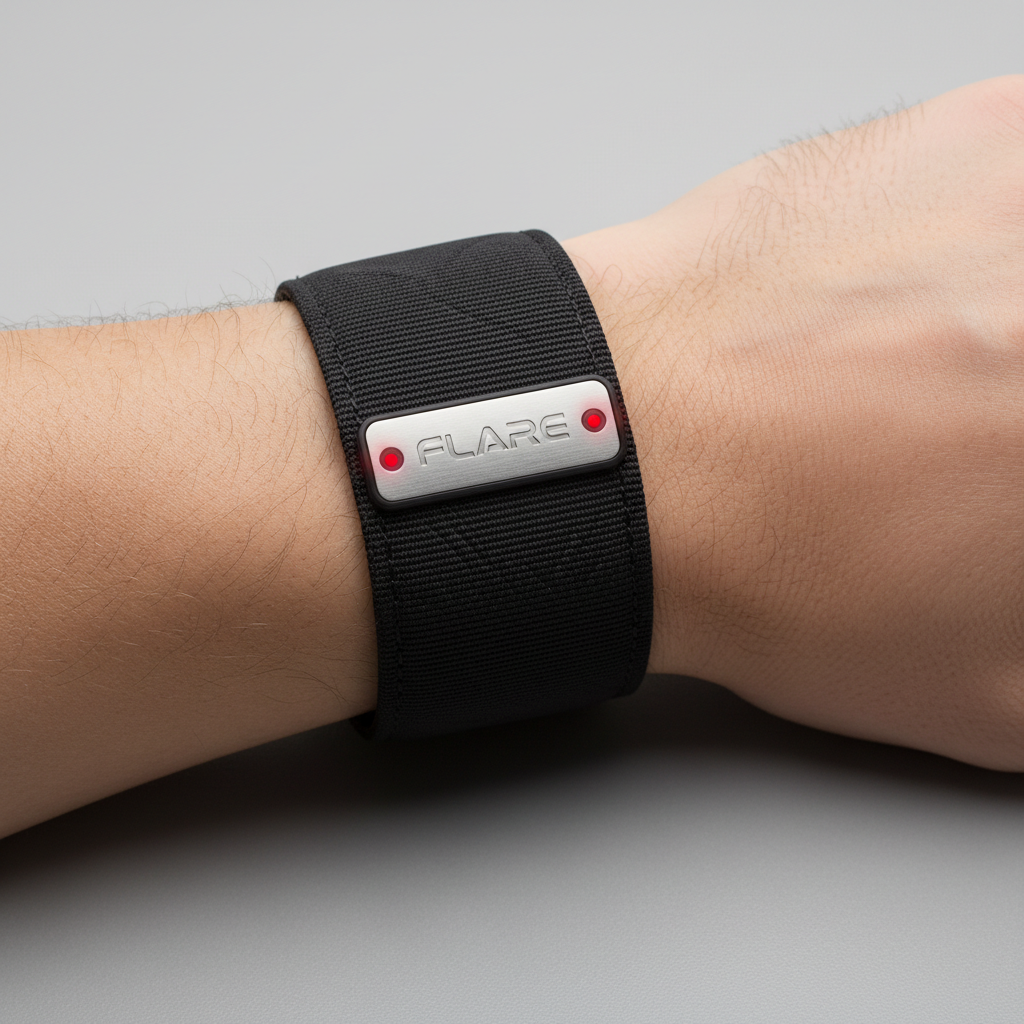
LogoFlare
Continuous Joint Intelligence

Know Before You Flare.

Flare reads joint inflammation through skin temperature micro-gradients and translates every throb, swell, and stiffness spike into a continuous severity score — before it derails your day.
12g
Band weight
0–100
Flare Index
±0.03°C
Thermal precision
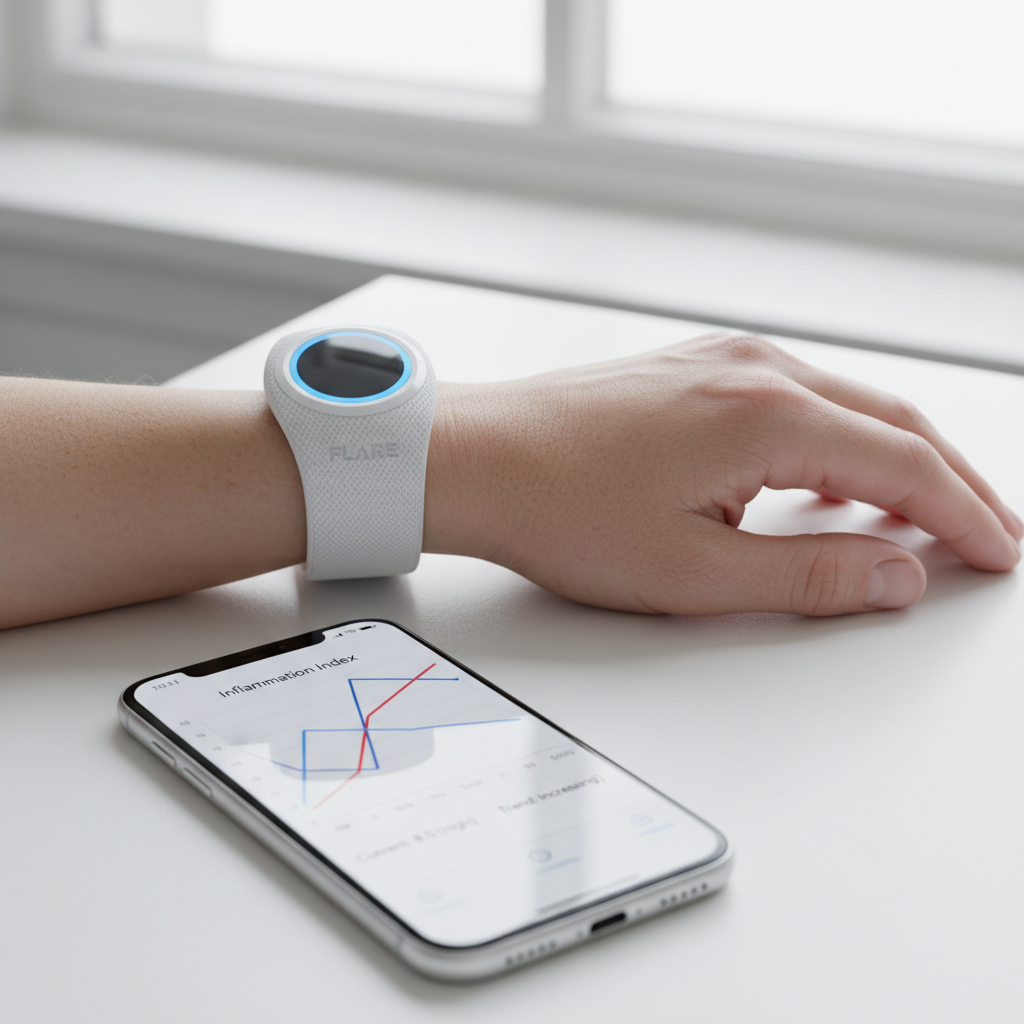
Patient's forearm and hand resting on white surface with Flare wrist monitor band visible, phone beside it showing live inflammation graph
Live Score
29
Stable
Flare Index
ΔTemp · MCP Joints
+0.18°C avg · 6h window
Sensor Array
IR 1–4ACTIVE
AccelACTIVE
PressureIDLE
Scroll
CE Marked Medical Device
FDA Breakthrough Designation
ISO 13485 Certified
±0.03°C Thermal Precision
12-gram Band Weight
7-Day Battery Life
HIPAA Compliant Data
Validated in 3 RCTs
Used in 14 Clinical Trials
Rheumatology Approved
CE Marked Medical Device
FDA Breakthrough Designation
ISO 13485 Certified
±0.03°C Thermal Precision
12-gram Band Weight
7-Day Battery Life
HIPAA Compliant Data
Validated in 3 RCTs
Used in 14 Clinical Trials
Rheumatology Approved
01

Wear it and forget it.

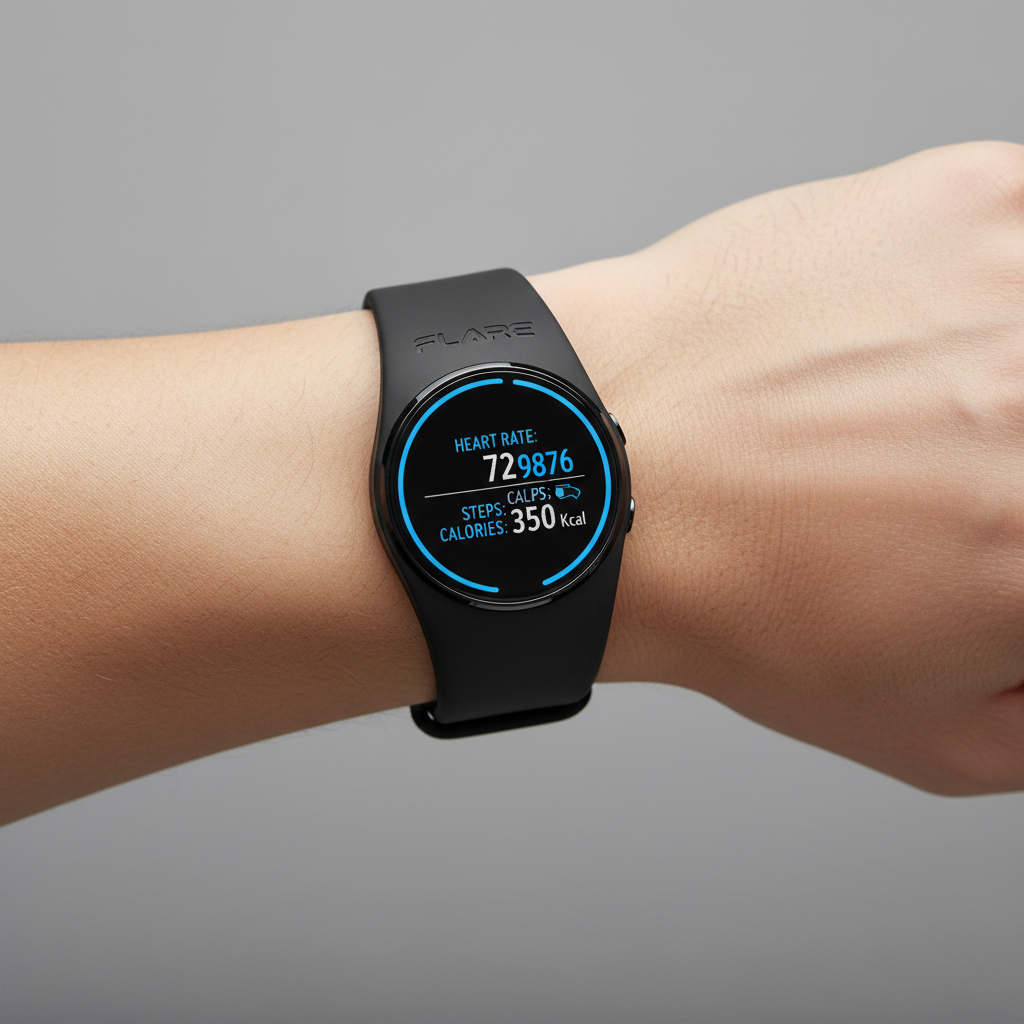
At 12 grams, Flare is lighter than a wedding ring. Three band sizes fit every wrist, and the medical-grade silicone never irritates inflamed skin.
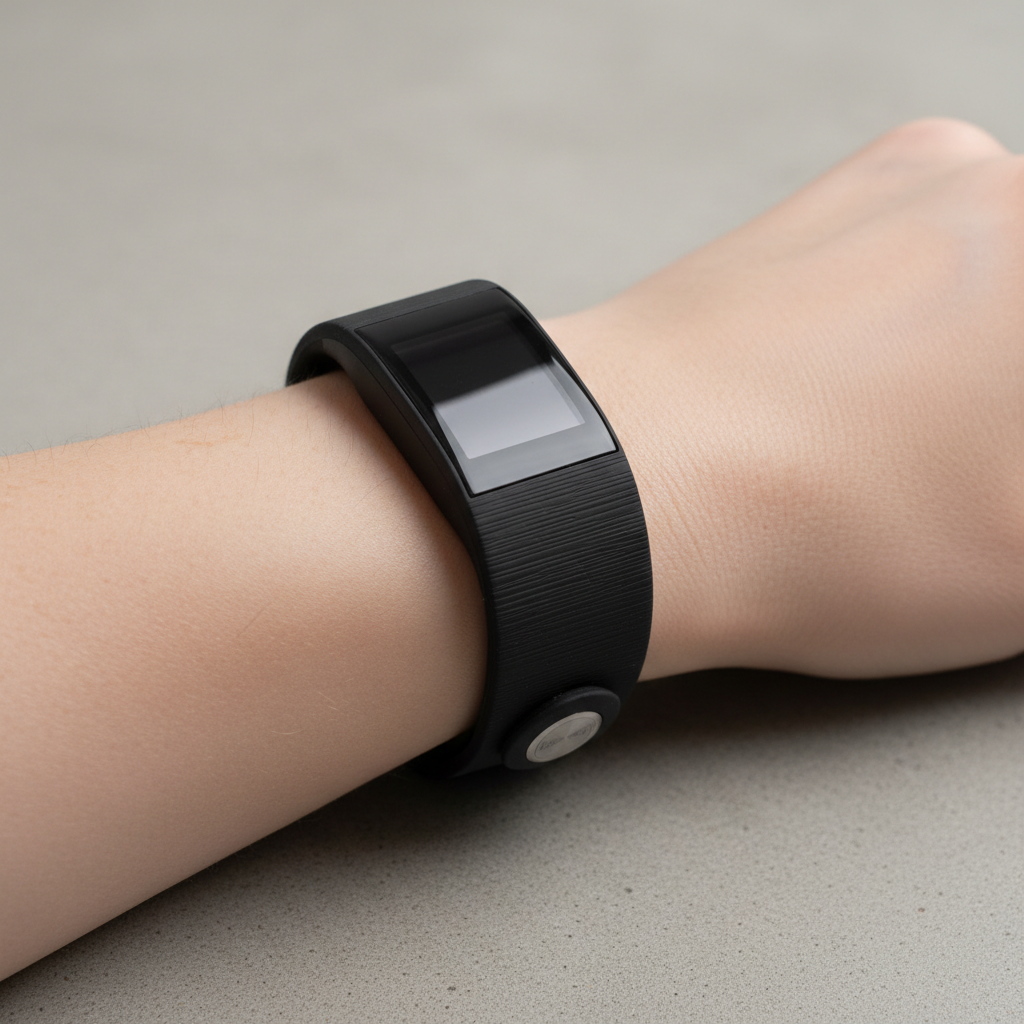
Small wrist wearing Flare monitor band
14–16 cm
Small
Medium wrist wearing Flare monitor band
16–18 cm
Medium
Large wrist wearing Flare monitor band
18–21 cm
Large
[FORM FACTOR]

Built for
inflamed hands.

Rounded edges, no pressure points, one-handed clasp designed for mornings when every finger counts.

12 g
Total weight
7 days
Battery life
IPX7
Water resistance
3 sizes
Band variants
02

Detect heat before it peaks.

Four infrared sensors sample skin temperature every 90 seconds across metacarpophalangeal and proximal interphalangeal joints — the exact sites where RA inflammation concentrates.

Sampling every 90 s · 4 IR sensors active
FLARE BAND36.8°36.4°37.1°36.6°
IR Thermal Map
LIVE
MCP 1 · 36.8°CNOMINAL
03

The Flare Index — 0 to 100.

Every sensor reading feeds a validated algorithm that outputs a single number. Tuesday morning at 68 is no longer your word against the world — it's data.

7-Day Flare Index
Week of Feb 17–23, 2026
Flare
Stable
0255075100
Mon22Stable
Tue68Moderate Flare
Wed55Moderate Flare
Thu41Mild Activity
Fri29Stable
Sat18Stable
Sun24Stable
Severity Scale
Stable0–29
Mild30–49
Moderate50–69
Severe70–100
Why It Matters

Disability assessors and rheumatologists see Tuesday's 68 and Friday's 29 side by side. No more "my hands were bad this week" — just timestamped, sensor-validated evidence.

Validated in 3 randomised trials
FLARE REPORT
Feb 17–23, 2026
Patient
Margaret K. — RA, 12y
Managing Physician: Dr. L. Osei-Bonsu
7-Day Flare Index
MTWTFSS
Peak score68 · Tuesday 06:42
Avg score36.7
Flare events2 (>50)
Sensor uptime99.1%
CE Marked · ISO 13485 · Validated Data
04

Share with your rheumatologist.

One tap generates a formatted PDF — patient name, 7-day Flare Index chart, peak events with timestamps, and sensor uptime. Arrives in your physician's inbox before your appointment.

Rheumatology-formatted
Structured to match ACR reporting guidelines — no reformatting needed.
Clinical trial export
HL7 FHIR-compatible JSON for coordinators replacing paper flare diaries.
HIPAA compliant
End-to-end encrypted. Your data never leaves your control.
05

Adjust the plan, not the guess.

When your rheumatologist can see continuous Flare Index data alongside methotrexate dosage timing, the conversation changes. Decisions come faster. Dosage adjustments are evidence-based, not intuition-based.

Rheumatologist reviewing patient data on tablet in clinical consultation room
Clinical Voice

"Before Flare, my patient with RA would describe her week as 'bad' or 'okay.' Now I see a Flare Index of 68 on Tuesday morning, 18 by Saturday — and I know exactly when her methotrexate window needs adjusting. It changed how I prescribe."

Dr. Lena Osei-Bonsu, Consultant Rheumatologist headshot
Dr. Lena Osei-Bonsu
Consultant Rheumatologist · King's College Hospital, London
3.2×
faster dosage decisions
vs. patient-reported diaries in a 2024 RCT (n=312)
47%
reduction in unplanned flares
among patients sharing weekly Flare Index reports with their rheumatologist
89%
of coordinators preferred objective data
over paper diaries in clinical trial settings (3 trials, 2023–2025)
Download Clinical Evidence Summary
Peer-reviewed · 3 RCTs · 14 clinical trials